Carrying Capacity and Building Height
System design is determined according to the height of the building and the required carrying capacity.


Hydraulic elevators provide ideal solutions for applications requiring smooth, safe and controlled movement, operating with a hydraulic pump unit.
Hydraulic elevators are an ideal elevator solution for applications that require smooth and safe movement, where the drive capability is provided by a hydraulic pump unit. The operating principle of these systems is based on converting fluid pressure into motion energy.
Hydraulic elevators stand out with their performance, design flexibility and safe operation advantages. The appropriate system configuration is created by designing according to carrying capacity, building height and building function.
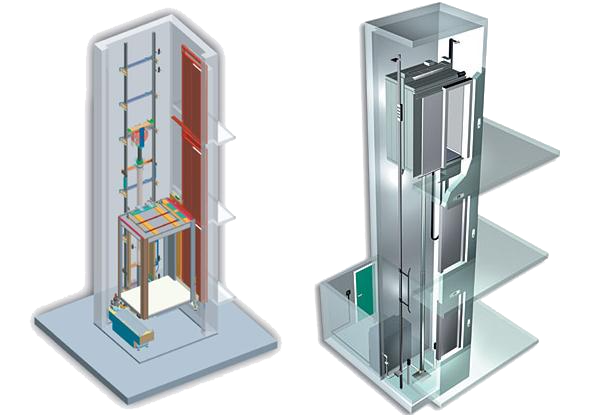
Hydraulic elevators offer many advantages in terms of both performance and design flexibility; they can be implemented efficiently according to building needs.
It adapts to architectural planning by offering more flexible placement options according to project needs.
Under suitable project conditions, it optimizes costs by providing economical installation and operating advantages.
Thanks to its controlled movement structure, it offers a comfortable, balanced and quiet user experience.
It can provide energy efficiency and may be preferred as an effective solution for larger-capacity elevator needs.
The selection of the most suitable hydraulic elevator is evaluated according to carrying capacity, building height, intended use and the method of moving the cabin.
System design is determined according to the height of the building and the required carrying capacity.
It is one of the main systems evaluated according to how the cabin is moved and is preferred in suitable projects.
It is another main system used depending on the type of hydraulic elevator and is examined according to project requirements.